Sources, not vibes
Perplexity
A search assistant that answers with links you can click. Better than a bare chatbot when you need a starting bibliography, and still capable of citing a page that does not say what the summary claims. Open the sources. For papers specifically, Elicit, Consensus, and Scite go deeper.
Best for
Early research and fact-finding when you want links, not a polished paragraph to paste into the book.
Pricing
Freemium. Free cited answers with limits. Pro adds stronger models and higher research caps.
Listing checked 14 October 2026. Plans move. The vendor's page wins an argument with this one.
In-depth review
Perplexity review
Last checked 14 October 2026 against the vendor's public pages. Prices and features change; check the vendor before you buy.
Writer's Toolbelt review
Perplexity
Answer engine with citations, now with "Computer" agents for deliverables. Fast research for writers.
- Pro per month, billed annually
- Max per month, billed annually
- to start for free
What it is
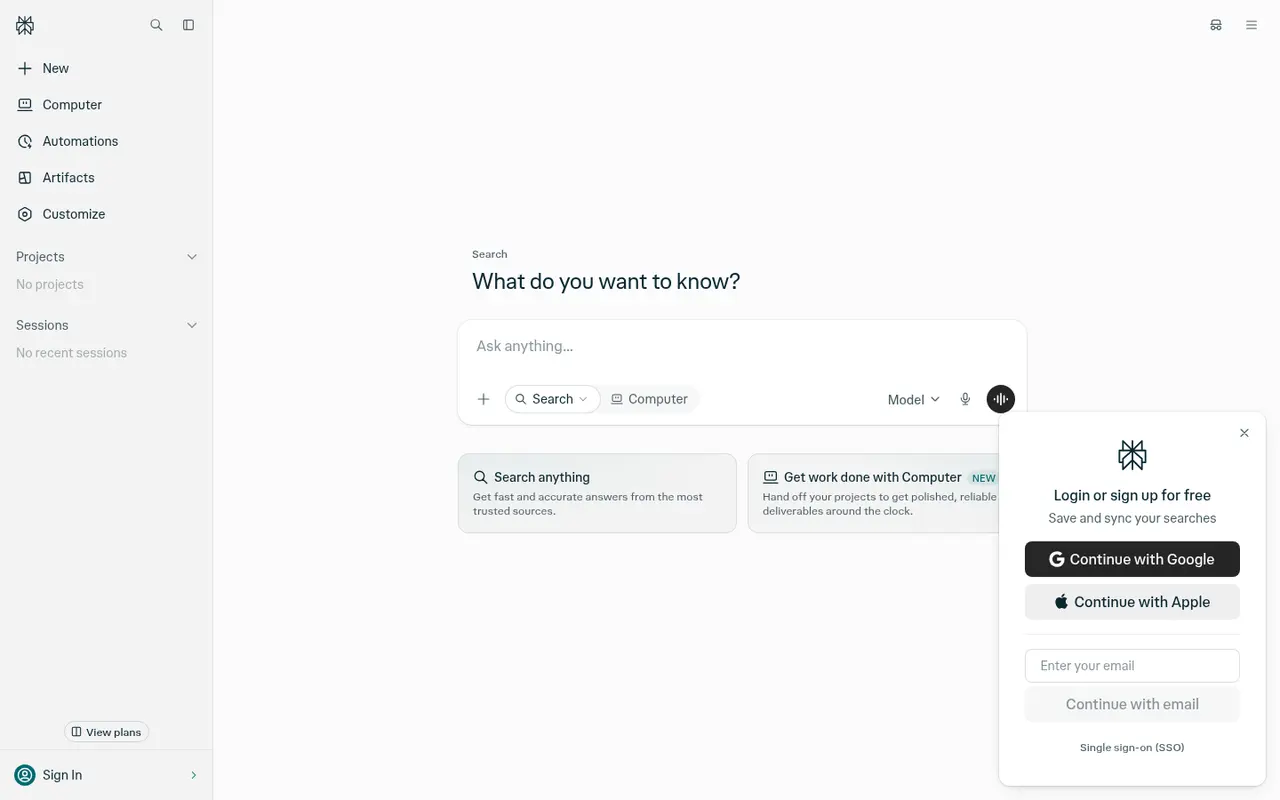
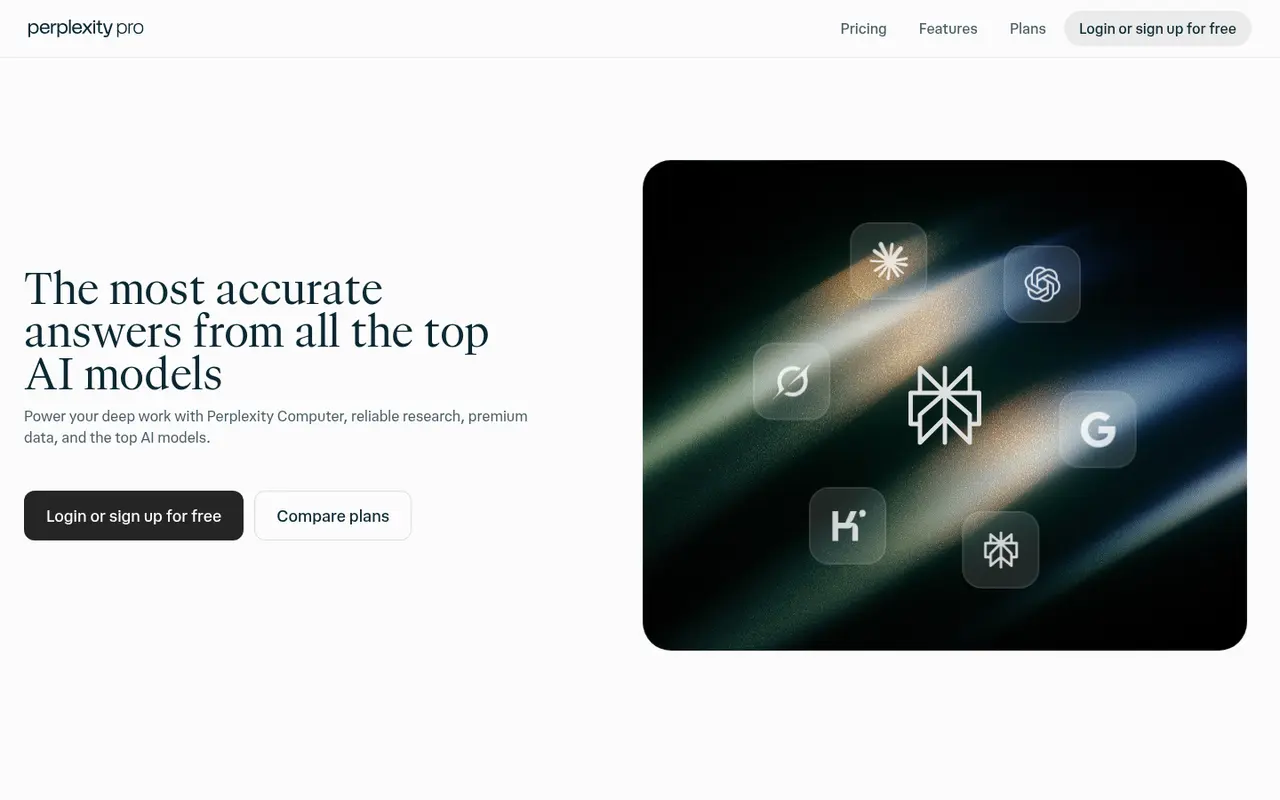
Perplexity is an AI answer engine that gives "fast and accurate answers from the most trusted sources", with citations. Its newer Computer feature lets you "hand off your projects to get polished, reliable deliverables around the clock". It "orchestrates the best AI model for each task", and paid plans add deep research and premium data sources.
Who it's for
- Writers doing quick factual research, such as places, dates, terminology or market questions.
- Nonfiction authors and journalists who want sources up front.
- Indie authors researching the market: comparable titles, pricing trends, platforms.
Key features in practice
- Search with sources. Every answer cites the pages it used.
- Deep research on Pro, and "expert level research" on Max.
- Computer. Agent-style tasks that produce deliverables, with credit allowances.
- Projects to keep research threads together.
- Premium sources. The page shows answers citing sources such as PitchBook and Statista.
Pricing (checked 14 October 2026)
| Plan | Price | Includes |
|---|---|---|
| Free | $0 | Search with sources |
| Pro | $17/month billed annually | Expanded Computer access, 4,000 bonus credits, deep research, higher limits and memory; limited-time +$40 Computer credits |
| Max | $167/month billed annually | Maximum Computer usage, 35,000 bonus + 10,000 monthly credits, expert research |
| Enterprise | Contact sales | — |
Pricing at a glance
- FreeSearch with sourcesFree
- ProDeep research, expanded Computer access$17/mo
- MaxMaximum Computer usage, 10,000 monthly credits$167/mo
- Enterprise
Contact sales
Using it as a writer
- Ask precise questions and open the top sources before using a fact.
- Use Projects per book to keep research threads organised.
- Use deep research for background chapters, then verify against primary sources.
- Don't cite Perplexity. Cite the source it found.
Strengths
- Citations by default.
- Very fast.
- A strong free tier.
Writer's Toolbelt editorial scores
Perplexity scorecard
8.4/10
- Speed to an answer9/10
- Citations8/10
- Depth (deep research)8/10
- Ease of use9/10
- Value for money8/10
Weaknesses
- Web sources vary in quality.
- Max is expensive.
- Credit systems for Computer add complexity.
How it compares
- Perplexity vs Consensus. Consensus is limited to peer-reviewed papers. Perplexity covers the whole web.
- Perplexity vs NotebookLM. NotebookLM answers only from your files.
- Perplexity vs ChatGPT. ChatGPT has deep research too, while Perplexity is search-first.
Feature comparison
AI research tools compared
| Feature | Consensus | Elicit | Scite | Perplexity | NotebookLM |
|---|---|---|---|---|---|
| Free plan | Yes | Yes | No | Yes | Yes |
| Lowest listed paid price | Yes$12 | Yes$49 | Yes$12 | Yes$17 | Yes$4.99 |
| All paid tiers have published prices | Yes | Yes | PartlySome tiers: contact sales or check vendor site | PartlySome tiers: contact sales or check vendor site | PartlySome tiers: contact sales or check vendor site |
| Competes with ProseEngine (we disclose) | No | No | No | No | No |
Verdict
Perplexity is one of the fastest ways to get a sourced answer. The free plan is enough for most writers, and Pro is worth it if you research daily.
FAQ
Is Perplexity free? Yes.
How much is Perplexity Pro? $17 a month billed annually as of 14 October 2026.
Can I trust its answers? Treat them as leads. Open and check the cited sources.
Nearby on the shelf
Drafting
ChatGPT
The general assistant most writers already have open. Useful for brainstorming, blurb variants, and line rewrites if you paste the scene and say what you want. It does not hold a novel together unless you build that memory yourself with projects or files, and it will invent sources if you let it.
Best for Writers who want one flexible assistant and will bring their own outline, pages, and skepticism.
FreemiumFiction and nonfictionDrafting
Claude
A general assistant that writers often prefer for long passages, tone, and a calmer revision pass. Projects can hold notes and chapters you upload. It is still a chat, not a novel app: continuity across a whole book is only as good as the pages you put in front of it.
Best for Drafting and revision when you want a careful reader more than a plot machine.
FreemiumFiction and nonfictionResearch
Consensus
Searches scientific papers for what the evidence says about a question, and tries to show agreement rather than a single link. Good for 'does this claim hold up?' and a poor place to learn narrative craft. Read it as a map of a literature, then go to the studies that matter.
Best for Nonfiction writers checking whether a popular claim survives contact with research papers.
FreemiumNonfiction